About Me
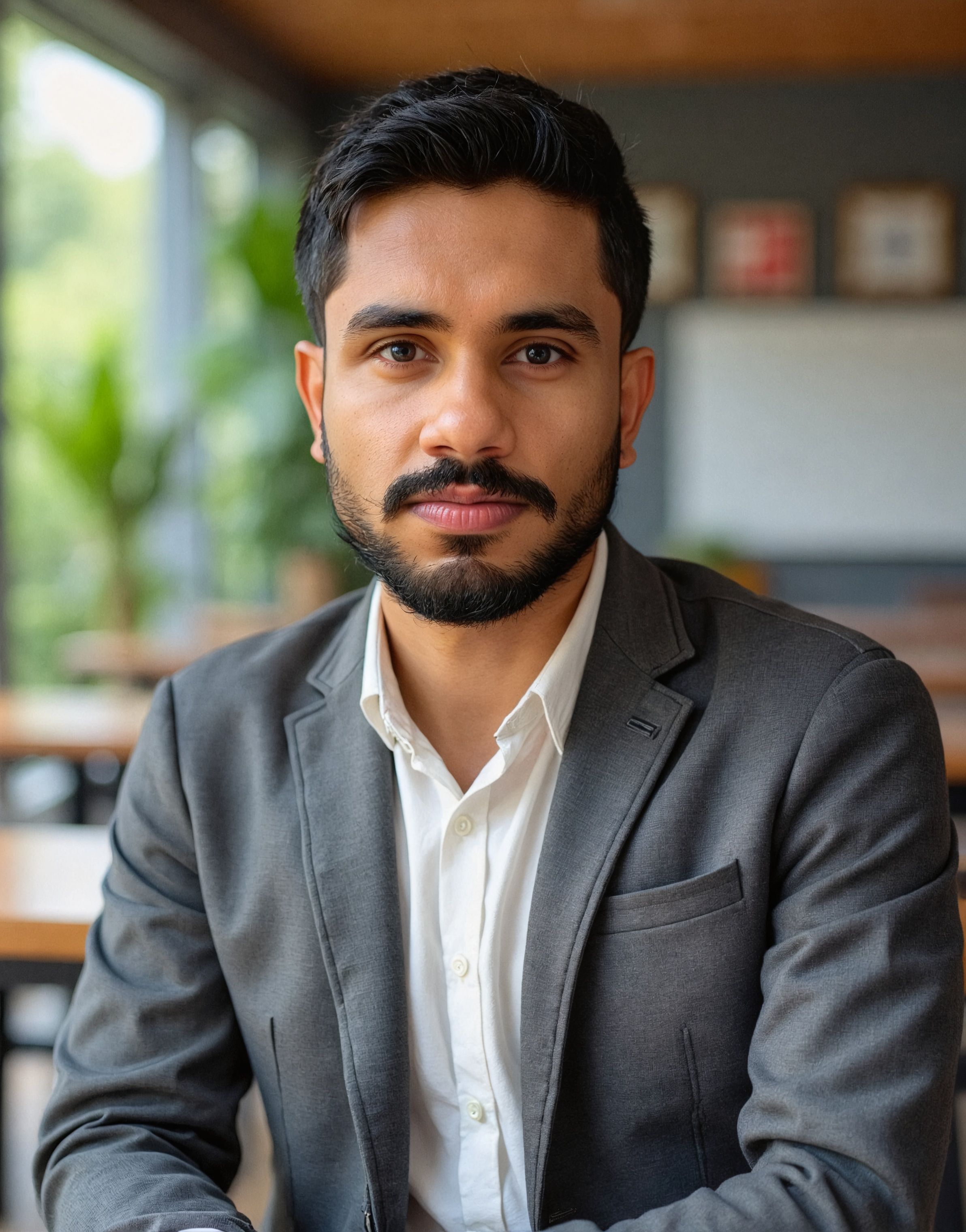
Hi! I’m Adithya Subramanian Sahasranamam.
Call me, Adi.
I’m a computational biologist in the Higginson Lab at Memorial Sloan Kettering, working where radiation oncology meets drug design — DNA repair as a target, not an afterthought. Most of my day is degraders and radiosensitizers (PROTACs, oligonucleotide conjugates) for nodes that resist small-molecule chemistry, plus the generative ML stack to propose and triage candidates before anything hits the bench.
Before biology, I came up through software architecture — so I still build like an engineer: SLURM pipelines, diffusion and graph models for de novo design, FastAPI services, and code that survives handoff to someone else.
Outside the lab, I’m a coffee enthusiast chasing the perfect pour-over, and I find clarity on the water, in the mountains and over a board of chess. When I need speed instead of stillness, NASCAR & F1 scratch that itch.
Collaborations and questions welcome.
Research Interests
- AI for drug development — generative models (diffusion, GNNs, RL), structure-based design, and ML-driven optimization from target hypothesis to synthesizable candidate.
- DNA repair pathways — how cancer cells choose between NHEJ, HR, and Alt-EJ under replication stress and after ionizing radiation — and when they fail to compensate.
- Degraders & radiosensitization — PROTACs, SMDCs, ADCs and AOCs against DNA repair targets (LIG4, Rad51, DNA-PKcs, ATM); design for targeted pathway-specific suppression, not global repair collapse.
- Sequencing & bioinformatics — Snakemake/Nextflow pipelines for Illumina and Nanopore; unsupervised models to map repair phenotypes back to protein function.
Latest on the blog
Targeted degradation of DNA Ligase IV through a dsDNA-based PROTAC (AACR 2026) →
First-in-class dsDNA PROTAC (NHEJ-P): near-complete LIG4 degradation at ~10 nM, ~50% NHEJ suppression, cancer-selective radiosensitization — no Alt-EJ or HR compensation. Poster, data, and implications. All posts →
Publications
- Pandey, M., Subramanian Sahasranamam, A., Higginson, D. LIG4 dsDNA PROTAC for precision radiosensitization. AACR 2026, Cancer Research 86(7_Supplement):238. Write-up →
- Helmuth, Richard, et al. “Integrin Activation as a Novel Therapeutic Strategy for Podocytopathies: FR-PO727.” Journal of the American Society of Nephrology 33.11S (2022): 521.
- Subramanian Sahasranamam, Adithya. “The Role of Irak-1 Transcripts in Sepsis” (2021). Theses. 1843.
Bookmarks
Not a field survey — things I reopen when designing degraders, building pipelines, or deciding what ML should own vs what a chemist still has to judge.
- PROTAC targeted protein degraders (Békés et al., Nat Rev Drug Discov 2022) — twenty years from Crews’s first PROTAC paper to clinical proof-of-concept; the review I send people when they ask which targets degradation actually fits (and which E3 ligases open precision medicine).
- Sequence modeling and design from molecular to genome scale with Evo (Nguyen et al., Science 2024) — a genomic foundation model that generates functional CRISPR systems and megabase-scale DNA; the paper that made me take oligonucleotide warheads seriously as design objects, not just delivery payloads.
- Antisense technology: an overview and prospectus (Crooke et al., Nat Rev Drug Discov 2021) — nine approved ASOs, multiple chemistries and routes of administration; the practical map for AOC/oligo conjugate design (chemistry, uptake, tissue targeting) before we ever pick a DNA bait sequence.
- Chess Skill in Man and Machine (Levy & Newborn) — masters don’t calculate deeper, they perceive better patterns and avoid blind alleys; my mental model for when ML should prune a search space vs when a medicinal chemist still has to look.
- Winning (Jack Welch) — candor as the missing ingredient in most orgs (ideas surface faster, meetings shrink); the 20-70-10 lens for resourcing — star programs, coach the middle, cut what’s not moving.
- The Cathedral and the Bazaar (Eric Raymond) — cathedral = plan in isolation, bazaar = release early, iterate with users; Raymond tested this deliberately on fetchmail. How I run pipelines the wet lab actually depends on.